With the aim of controlling and fortifying the borders of the Pyrenean areas, Franco’s military contingents were deployed massively in the territory over a period of more than 20 years, from the very beginning of the Civil War.The whole of the Pyrenees was militarised and the local population suffered the consequences directly.The military authorities had free rein over public and private property. “You weren’t even in control of what was yours”, recalls María Jaúregui, a resident of Igal (Navarre).
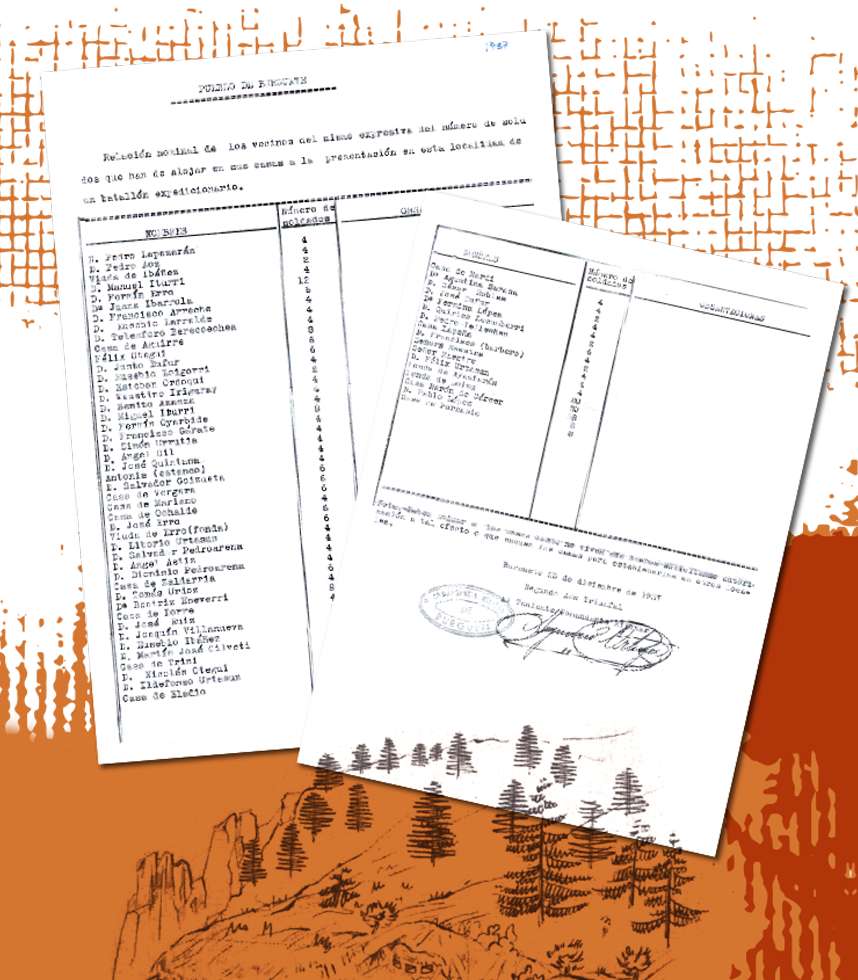
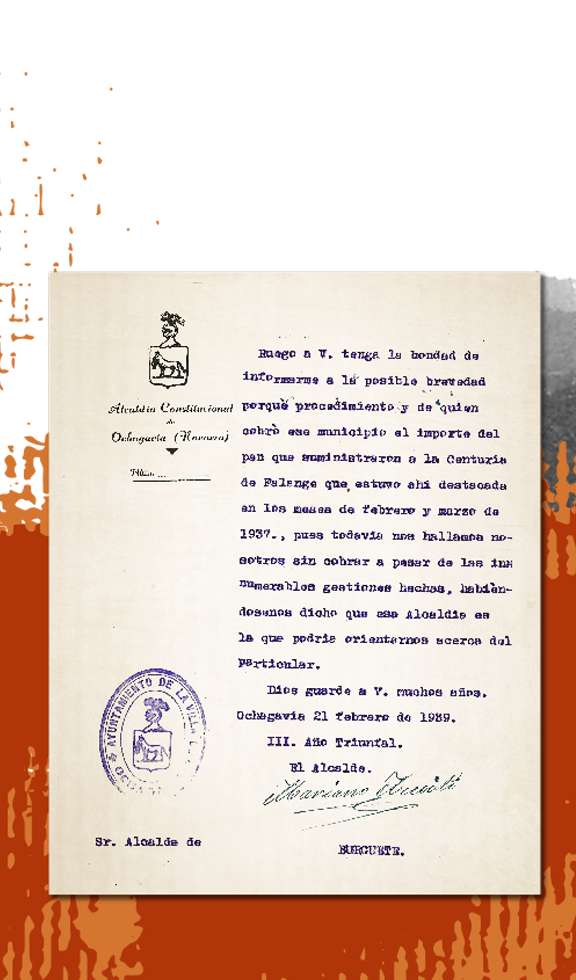
Land and buildings were occupied to house soldiers and prisoners, as in the case of Roncal, where the school was vacated to make room for a battalion of prisoners.The officers, on the other hand, were housed in private houses, and the soldiers used the stables, mules and even the vehicles of the villagers, who sometimes had to provide keep for the soldiers. Promised payments are often delayed, and sometimes never arrived.But not everyone in the Pyrenean valleys lost out with the presence of the military, and some families knew how to make the most of it financially.
Militarisation also affected the forests. A large number of trees were felled for the construction of the barracks, regardless of the communal regulations on forest exploitation.In Vidángoz (Navarre), the Town Council complained in 1940 that “today the two best communal forests, which were covered with oak trees ten months ago, are completely razed to the ground”.On the other hand, restrictions were imposed on mobility and hunting, essential activities to the local economy.
In addition, daily life was affected by the imposition of the dictatorship’s rituals and symbolism.The military presence entailed the singing of hymns, parades, collections in favour of the Blue Division, discretionary sanctions…
Burguete (Navarre). 1937. Taking turns to provide accommodation for soldiers in private houses. Town Council Archive of Auritz/Burguete (AMB) Box 13.30. Spain. Ministry of Defence. General Military Archive of Avila (AGMAV). M. 1884.14.
Otsagabia (Navarre). 1939. Payment claims for accommodation of militias. Town Council Archive of Auritz/Burguete (AMB). Box