Forced labour
Weaving networks of solidarity
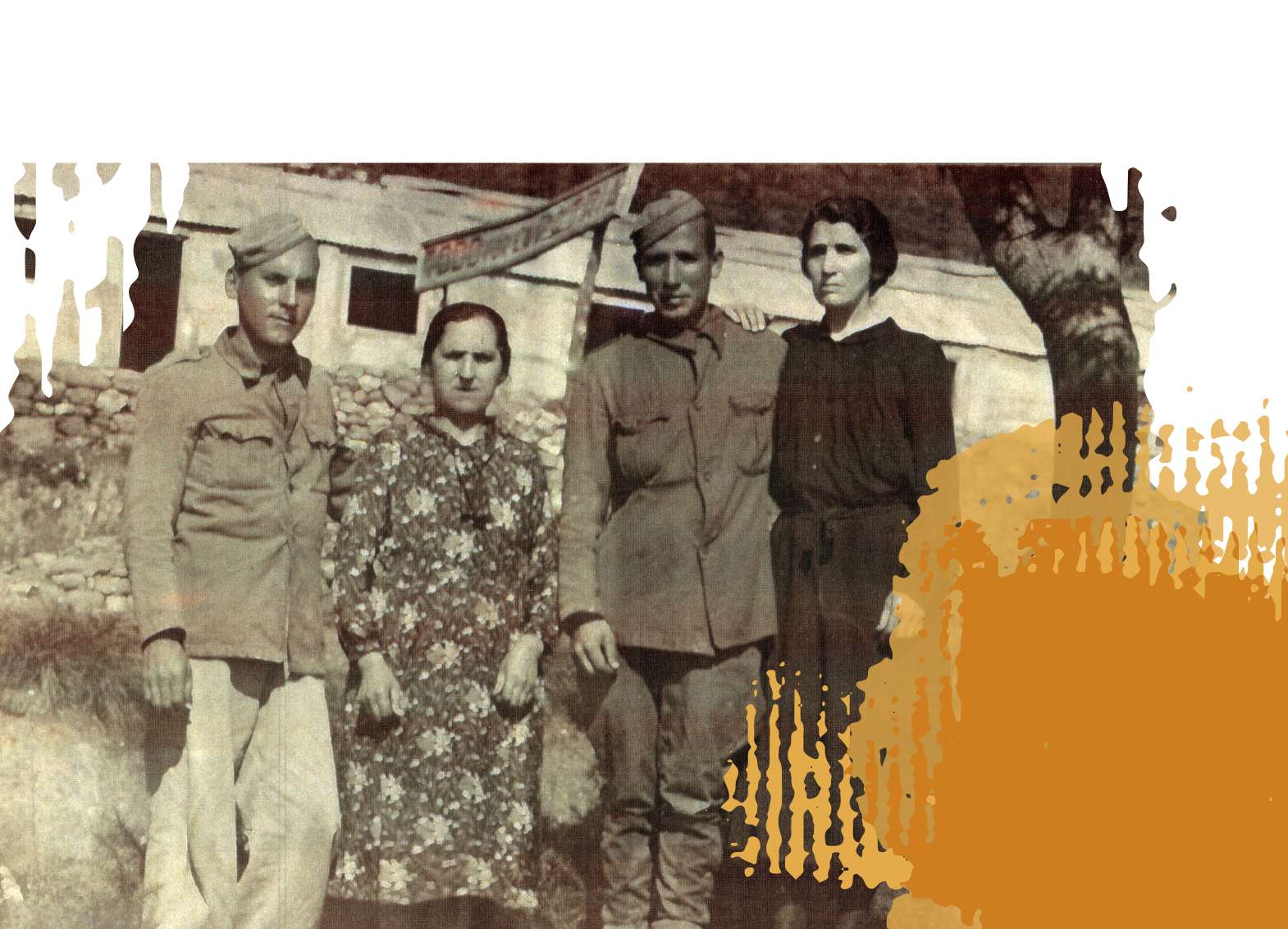
The harsh situation of those who worked on the construction of the fortifications led to the emergence of solidarity dynamics, based on family ties as well as humanitarian and ideological motives. The families of the workers participated, but also the inhabitants of nearby towns. Many of these expressions were led by women.
In the case of prisoners working in the Pyrenees, their families made significant efforts to visit and send them food. The families of villages in the area provided them with food or washed their clothes. When prisoners, driven by hunger, stole from vegetable gardens or stables, some denounced them to the soldiers, but there were also those who did not.
Opposite the camp called Babiloni there was a farmhouse that an old woman, who had children just like us, let us use, and, of course, we went there to steal whatever we could, corn; and I used to say to the woman: “You don’t complain, madam", "How can I complain, love, when I have sons just like you!

Félix Padín about his captivity in Oiartzun (Guipuzcoa).
In addition, there were also networks to facilitate the escape of some prisoners.
Further to my letter no. 876 of the 9th of this month concerning the escape of prisoners and of some soldiers from the escort of the Workers' Battalions, I have the honour to inform you that according to information from France, the deserters presented themselves at the Gendarmes Mobile Guards post at Erbaury (about three kilometres from Ibardin), they arrived at the aforementioned post without the slightest hesitation, which shows that they were directed by someone who lives near the border.
Spain. Ministry of Defence. General Military Archive of Avila (AGMAV). C. 3572, 169.
At the same time, the Spanish exiles who built the bunkers on the Atlantic coast, isolated and far from their families, stick together and harbour the hope of the imminent end of fascism and the return to their loved ones.
Behind the fence, on a nearby road, free, clean and well-dressed men and women walked by. They went in and out of an aviation factory, showing a pass to the sentries. Looking at them from the inside, through wire mesh, we imagined they had a home where their family was, a hearth to welcome them and the thousand and one images of what freedom looks like seen from this side of the fence.
Memoirs of a Spanish exile who worked on the construction of the German submarine base in Bordeaux.
Forced
labour
- Who built the Fortifications in the Pyrenees?
- Who built the Atlantic wall?
- Extreme working conditions
- The extensive geography of reinforced labour
- Vicente Gasulla-Solé
- From exile to forced labour
- Marce Melgar: Photographs and solidarity
- Weaving networks of solidarity