

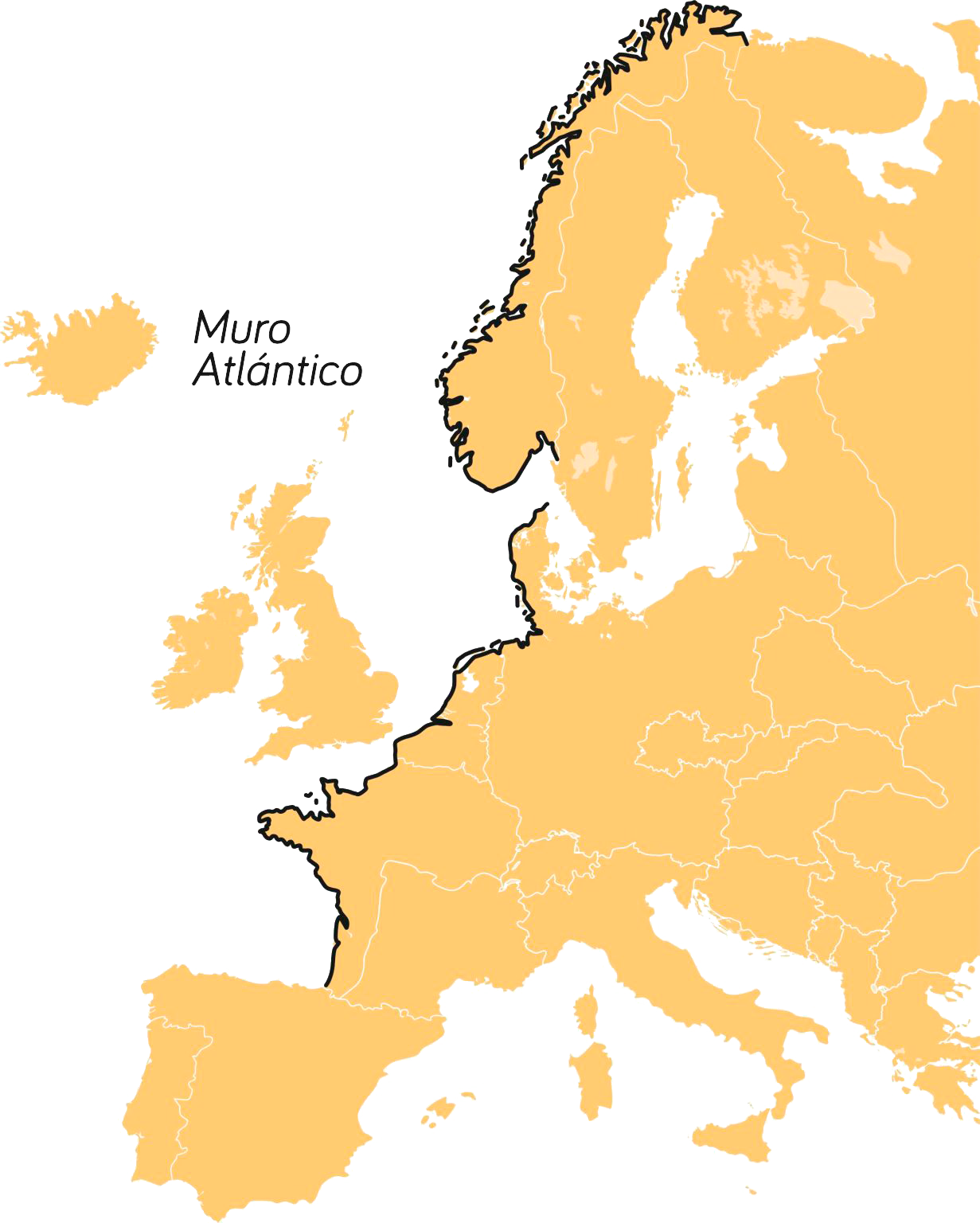
In March 1942, following the invasion of a large part of Europe by the German armies, Hitler ordered the construction of the largest defensive infrastructure in military history, aimed at securing control of the conquered territory: the Atlantic Wall. This was a line of bunkers, anti-aircraft batteries, submarine bases, etc. stretching almost 3,000 kilometres between Hendaye and the North Cape in Norway, which was to “shield” the Atlantic coast under German rule.
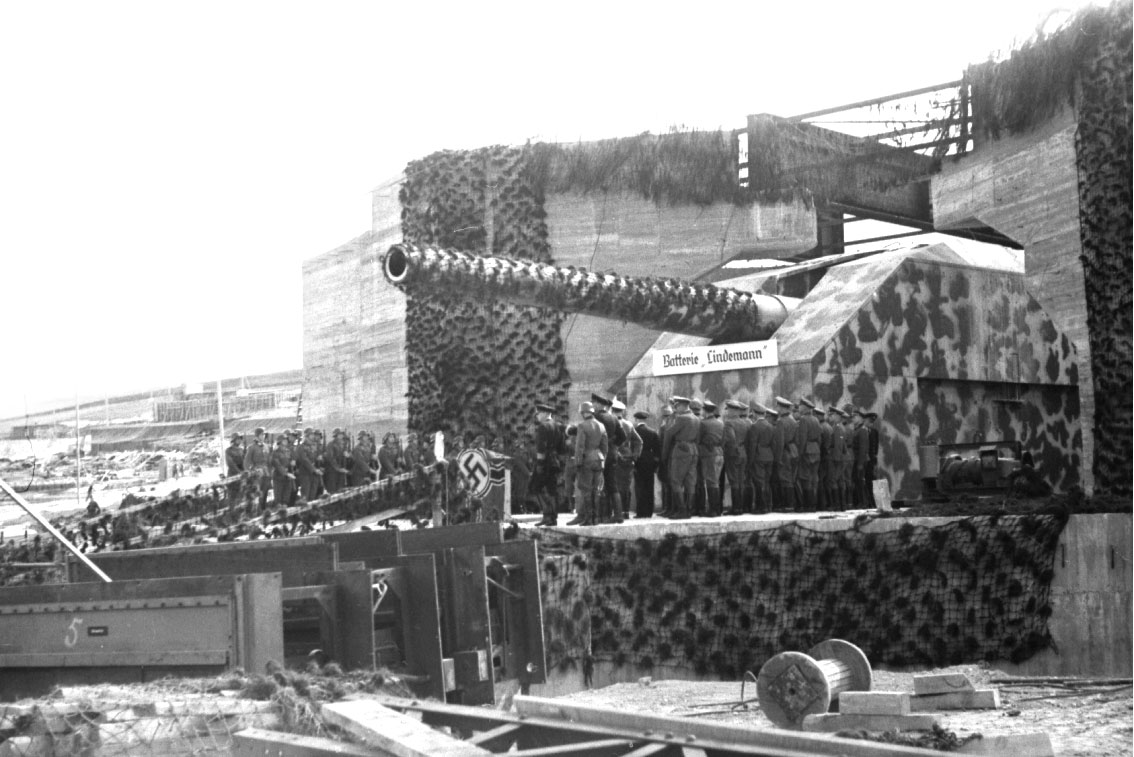
Inauguration of the Battery Lindemann.
Hitler’s orders were to erect 15,000 fortifications by the summer of 1943. These ambitious plans were to clash with reality. By the planned date, just over 8,000 had been completed. By the time of the Allied landings in Normandy, just over 11,000 fortifications had been built.
The construction effort was enormous and required the participation of 300,000 workers in France alone. The “Regelbau” system was used, with books of drawings for each of 600+ types of bunkers and casemates approved, to standardise and speed up the construction process, a methodology that would later be applied in the second phase of the Pyrenean Fortification.
A wide variety of structures were erected, from large artillery positions, anti-tank cannons and machine gun nests to an immense range of coastal defences, mined areas, etc. The latter were developed under the orders of Marshal Rommel in the months leading up to the Allied landings.